


Credit in the Age of AI

AI is changing credit work now. Based on global research with credit professionals, ‘Credit in the Age of AI’ examines how AI is being used and what separates basic adoption from measurable impact.
The finding is clear: The positive impact of AI depends on governance, skills, workflow design, and human judgment — not tools alone.
Download the report to access the full research on AI use and impact in credit, and receive complimentary GICP membership with additional insights, resources, and professional development opportunities.
AI in Credit: Key Statistics
The research shows an execution gap, not just an adoption gap.
- AI adoption is still shallow: 56% of organizations use AI in less than 25% of credit processes, including 14% who are not using AI at all.
- AI adoption is strongest in drafting, analysis, and research. 40%-70% of respondents report using AI in document drafting, credit and financial analysis, and market and peer research.
- AI impact is strongest closest to credit decisions: Risk assessment and scoring show the greatest reported AI-enabled impact across the credit activities measured.
- Governance separates high-impact AI organizations: 50% of ‘leaders’ have formal AI governance policies or frameworks, compared with 18% of ‘emerging adopters’.
- Leadership and governance factors are the biggest blocker: 65% of respondents cite barriers such as lack of AI strategy, leadership buy-in, accountability fears, or regulatory concerns, but only 38% are investing in these.
- Governance is linked to AI impact: Organizations with the most governance factors in place are far more likely to report high AI impact than those with fewer factors: 67% with 8–9 factors in place, compared with 23% with 0-1 factors.
- Achieving high organizational impact from AI requires workforce change: Organizations citing higher impact from AI activities report 2.58 workforce changes on average, compared with 1.22 among organizations reporting lower impact.
- AI ambition is outpacing readiness: 79% of organizations expecting AI disruption from GenAI, autonomous decision-making or real-time monitoring are not yet deploying AI in the corresponding workflows.
AI adoption in credit is rising, but its impact is uneven
Key insight: Organizations reporting the greatest impact from AI (leaders) are not just using more AI. They are better at making AI work than those reporting lower impact (emerging adopters).
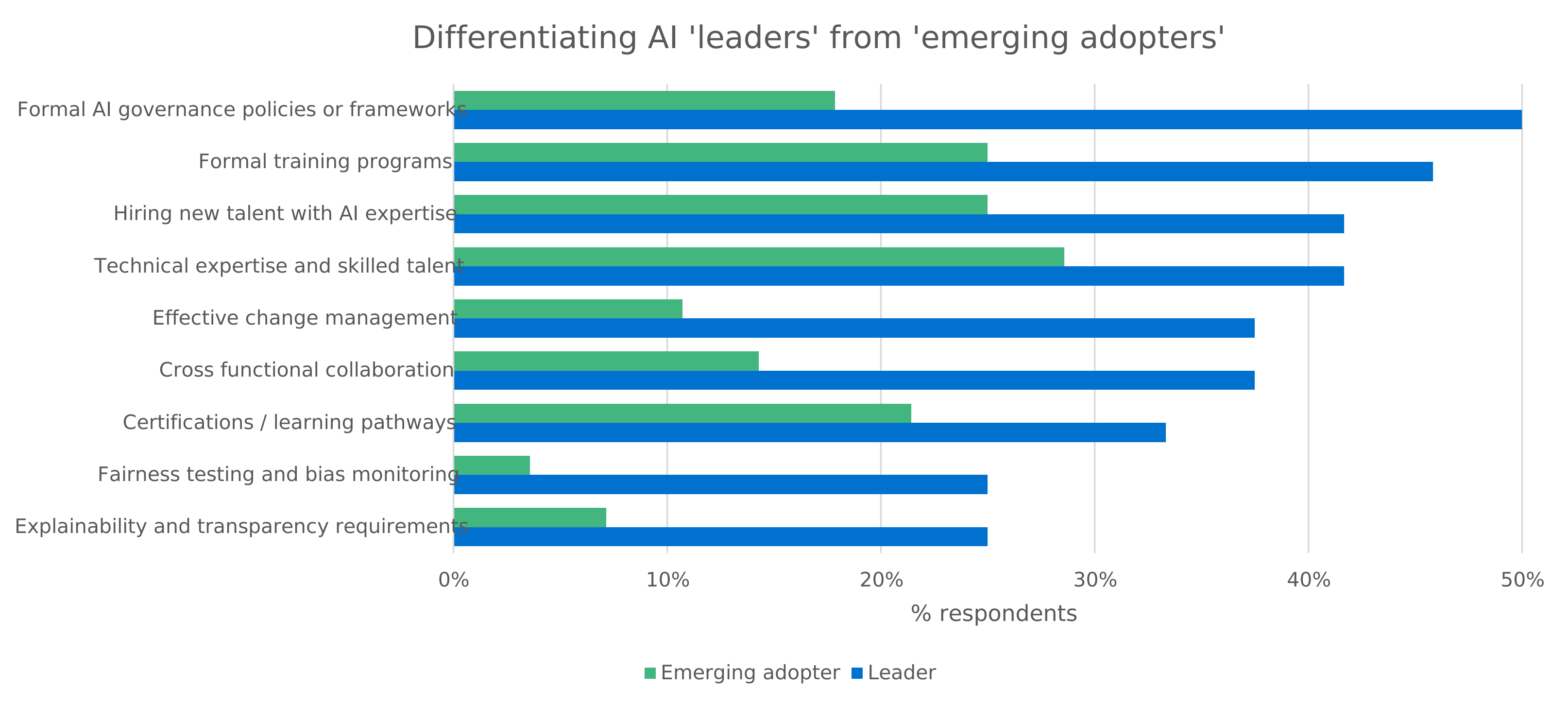
‘Leaders’ are more likely to have formal governance, effective change management, cross-functional collaboration, and structured training. This is the execution gap in action. The point is simple: AI changes the work, not just the tools. Organizations experiencing impact are redesigning their roles, workflows and skills around AI.
Governance makes AI scalable
Key insight: Higher governance maturity is linked to higher AI impact.
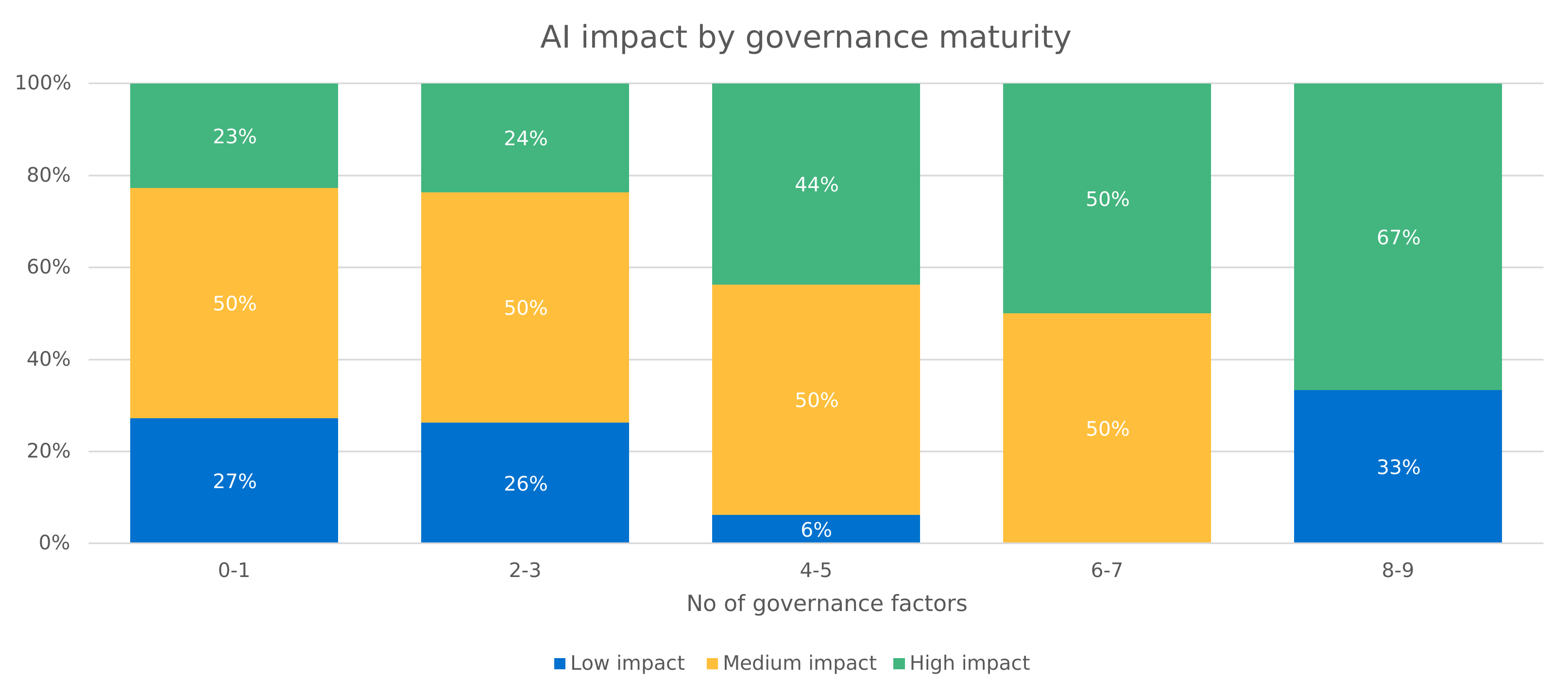
Governance does not slow AI down. It makes AI usable. Clear oversight, validation, assurance, and accountability allow teams to use AI with confidence in high-stakes credit work.
Organizations with more governance factors in place report greater impact of AI activities than those with fewer factors present.
Why AI adoption stalls in credit
Key insight: Organizations know the barriers to adopting AI. However, investment is not keeping pace.
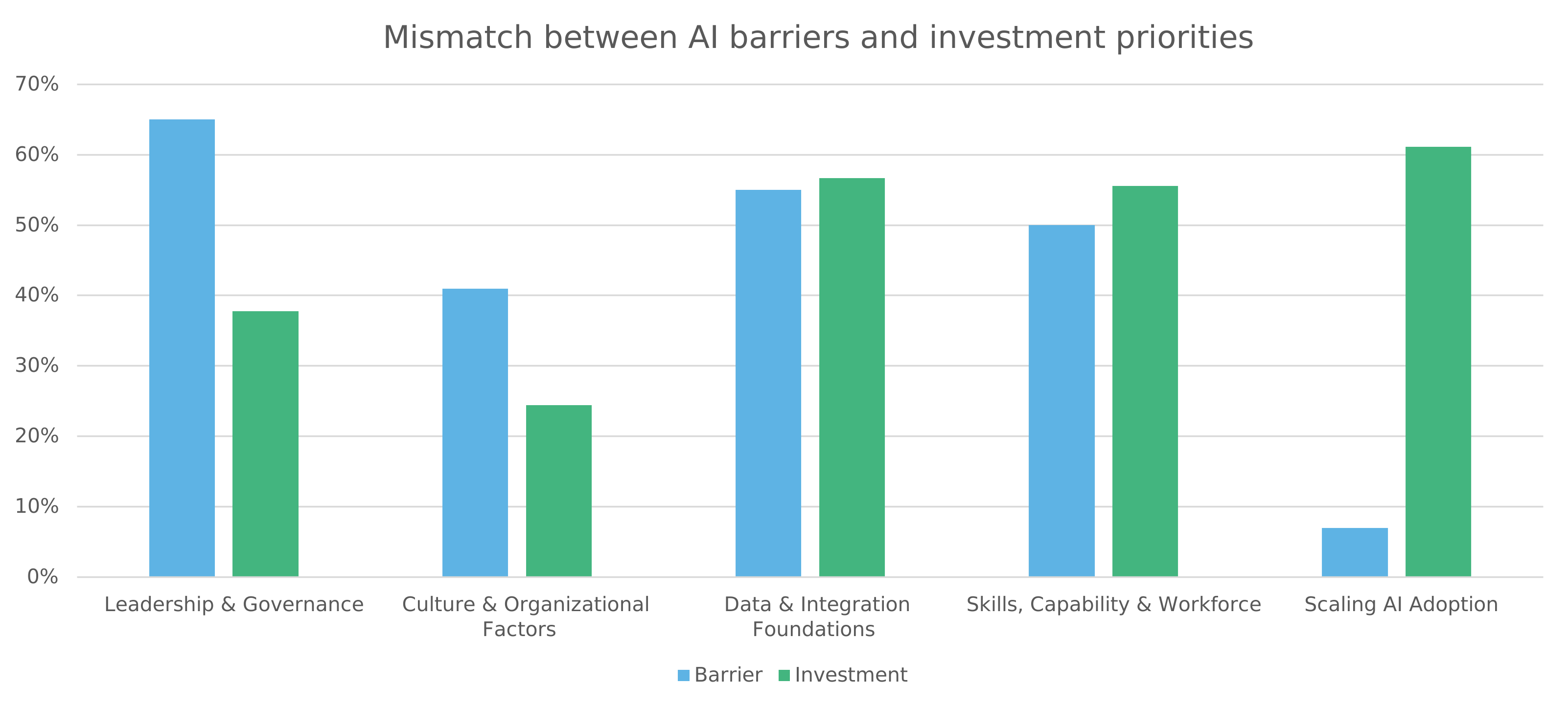
AI adoption stalls when investment misses the real barriers. Skills, data quality, systems integration, strategy, governance, and time to experiment all limit progress.
The research shows a clear mismatch. Organizations often fund visible initiatives, such as training programs and new use cases, while underinvesting in the harder work of strategy, integration, governance routines, and protected time to experiment.
What does AI mean for credit professionals?
-
How is AI being used in credit?
AI is being used in credit analysis, document drafting and review, market and peer research, monitoring, workflow automation, and risk assessment. The greatest impact is emerging where AI supports decision-critical workflows, not just routine productivity tasks. However, most use remains shallow.
-
Where does AI create the most value in credit?
The biggest value currently sits in risk assessment, early warning, underwriting, pricing, and monitoring. Where outputs are easy to check and errors are low-cost, value shows up quickly. Where outputs influence capital, pricing, or risk outcomes, assurance and operating controls become the limiting factor.
-
Why does AI still need human judgment?
Credit professionals must be able to use AI outputs, test them, challenge them, and apply judgment when decisions affect risk, pricing, capital, or clients. Human accountability remains central to AI-enabled credit work.
How can credit teams use AI effectively?
Credit teams can use AI effectively when they combine governance, high-quality data, AI literacy, workflow redesign, and clear human accountability. AI works best when it strengthens credit judgment, rather than replacing it.
- Build AI literacy across credit teams.
- Put governance in place before AI moves closer to live decisions.
- Invest in skills, data, integration, and operating models.
- Redesign workflows so AI strengthens judgment and accountability.
Global Credit Certificate: AI-ready Credit Skills
The Global Credit Certificate helps credit professionals build the skills needed for modern credit work.
AI is not just part of the syllabus. It is part of how the certificate prepares professionals in today’s credit markets. The GCC helps learners understand where AI fits across the credit lifecycle, use AI outputs responsibly, and apply sound judgment in AI-enabled analysis, monitoring, and decision-making.
Credit professionals who stay ahead will combine credit expertise with AI literacy and judgment. They will work faster, challenge outputs, and protect accountability. The GCC gives individuals and teams a practical route to build that capability.
Explore the Global Credit Certificate for AI-ready credit skills.