


How to Negotiate Salary: 10 Tips for Finance Professionals
Knowing how to negotiate salary can help you secure compensation that better reflects your skills, experience, and market value. Whether you’re negotiating a new job offer or asking for a raise, preparation is key. These 10 salary negotiation tips explain what to do, what to avoid, and how to approach the conversation with confidence. For a broader view of roles, progression and earning potential, explore our Careers Guide.
How do you negotiate salary?
Research the market rate for your role, define the salary you’re seeking, and build your case around your skills, experience, and achievements. When you receive an offer, consider the total compensation package before responding and approach the negotiation professionally and constructively.
Negotiating a job offer or asking for a pay rise
The approach you take will depend on whether you are discussing a new job offer or seeking a pay rise in your current role. When negotiating an offer, focus on the market value of the position, the full compensation package and the value you would bring to the organization. When asking for a pay rise, build your case around your achievements, increased responsibilities and contribution since your salary was last reviewed. Market benchmarks are also useful, but you should not solely rely on these.
What to say when negotiating salary
When negotiating a job offer:
Thank you for the offer. I’m very interested in the role. Based on the responsibilities of the position, my experience and the market range for comparable roles, I was expecting a salary closer to [amount]. Is there flexibility to review the offer?
When asking for a pay rise:
I’d like to discuss my salary in light of the additional responsibilities I’ve taken on and the results I’ve delivered over the past year. Based on my contribution and the market range for the role, I’d like to discuss adjusting my salary to [amount].
-
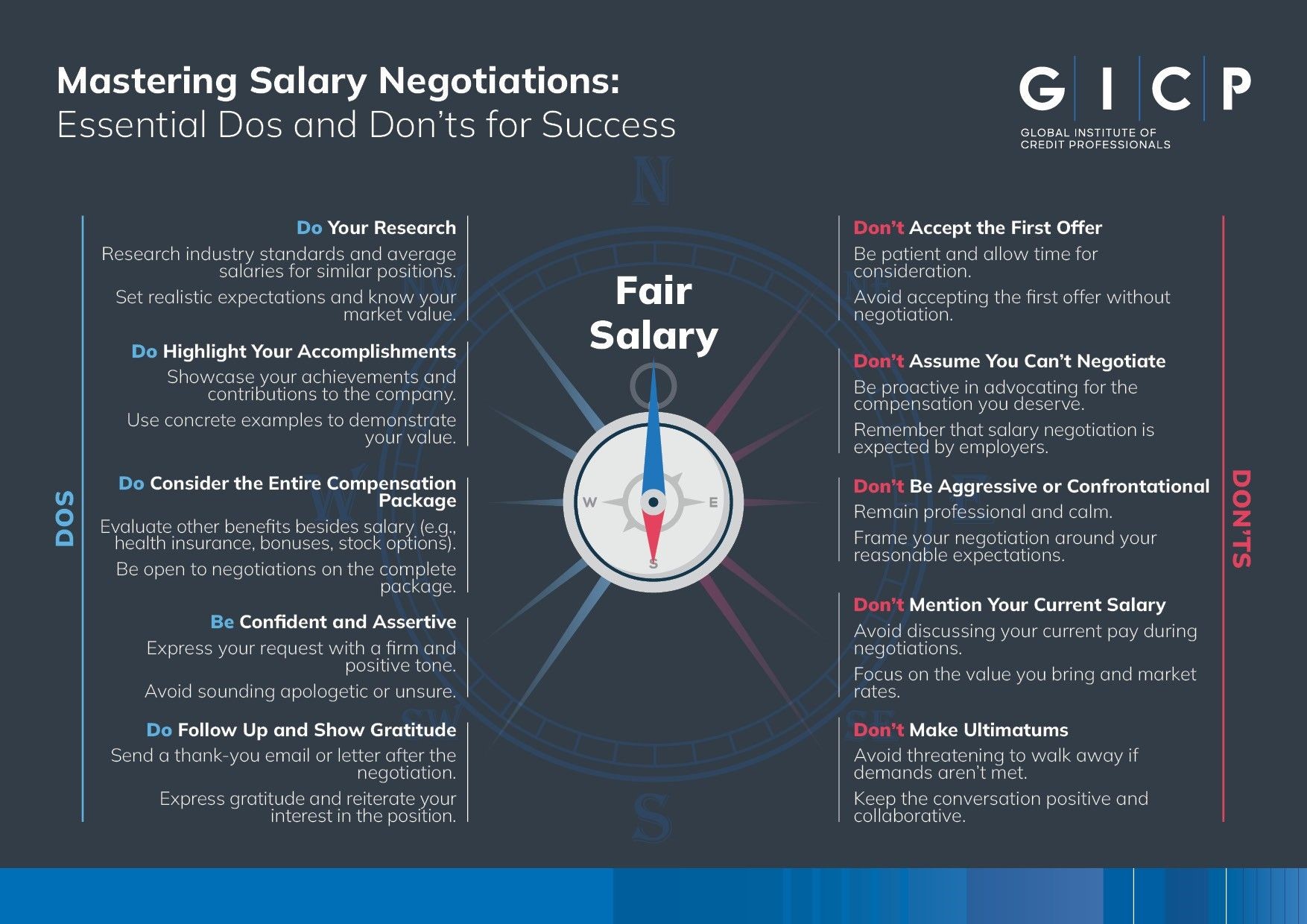
Do your salary research before negotiating
Before you start negotiating your salary, do some market research to determine your worth in the industry. This will help you have a realistic understanding of the salary range for someone with your skills and experience. Websites like Glassdoor, Payscale, and LinkedIn can provide valuable insights into the typical pay scale for your job and location. Use this information to help you determine your value to the employer. This way, you will be able to justify your salary requirements during negotiations.
-
Do highlight your accomplishments
During the negotiation, focus on your achievements and contributions to the company. Showcase how your skills and experience have positively impacted the organization. By doing so, you are demonstrating your value as an employee and why you deserve to be compensated fairly.
-
Do consider the salary and full benefits package
Salary is important, but it’s not the only factor to consider when negotiating compensation. Consider the total benefits package, including health insurance, paid time off, retirement, and other perks. The value of these benefits should also be taken into consideration when negotiating your salary offer.
-
Do be confident and assertive
Confidence is key during salary negotiations. Express your request for a higher salary with a firm and positive tone. Avoid sounding apologetic or unsure, as it may weaken your position. Practice your negotiation points beforehand, be prepared to articulate your case clearly and confidently and be ready with your responses to common questions or objections.
-
Do follow up and show gratitude
After you have negotiated your salary and reached an agreement, it is essential to show your appreciation to the employer. This demonstrates professionalism and leaves a positive impression. Thank them for the opportunity, express your enthusiasm for the job, and confirm the details of your agreement in writing. Following up with the employer shows that you are committed to the job and that you are a professional.
-
Don’t accept the first salary offer immediately
When an employer makes an offer, don’t accept it right away – it may not be the best they can do. Take the time to evaluate the offer and consider all the factors, such as benefits, vacation time, and job responsibilities. Be willing to negotiate back and forth until both parties reach a mutually satisfactory agreement.
-
Don’t assume a salary offer is non-negotiable
Many people believe that they are not eligible to negotiate their salary or that the employer won’t agree to make changes. While it can be intimidating to request a higher salary, you should never assume that you can’t negotiate. Employers expect salary negotiations and see it as an essential part of the hiring process.
-
Don’t be aggressive or confrontational
Salary negotiations can be stressful, but it’s important to remain professional and calm. Don’t be aggressive or confrontational with your employer, as this may reflect poorly on you. Instead, frame your negotiation around your market research and the value you bring to the company.
-
Don’t mention your current salary
When negotiating a new job or a raise, avoid discussing your current salary. Salary varies based on a lot of factors like location, experience and industry, so revealing this information could potentially anchor the new offer to your current pay, limiting your chances of getting a substantial increase. Instead, focus on the value you bring to the company and the market rates for your skills.
-
Don’t make ultimatums
Threatening to walk away if your salary demands aren’t met can backfire. It might put unnecessary pressure on the employer and create a negative impression. Instead, keep the conversation positive and collaborative. Show your enthusiasm for the job while expressing your expectations clearly.
Negotiating your salary can be a crucial step in advancing your career as a credit professional. Do your research, highlight your accomplishments, and consider the bigger picture when negotiating for compensation. By employing these dos and don’ts, you will be in a better position to negotiate your salary, attain what you deserve and be an asset to any organization you work with.